

Understanding Big Candy: Key Players and Trends
Discover the key players in Big Candy 🍬, their product trends, and how they tackle health concerns, regulations, and supply challenges for a sweeter future ahead.
Edited By
Oliver Mason
Big Candy Non-Directional Beacons, or NDBs, might sound like something from a sweet shop, but they’re actually vital parts of aviation navigation. These radio beacons send out signals in all directions, helping pilots pinpoint their position by tracking those signals. They’re the sort of old-school technology you still find dotted around Australia’s vast skies, supporting flights where GPS signals might be weak or unavailable.
Unlike a directional signal that beams from one point to another, an NDB like Big Candy emits a steady, omnidirectional radio signal. Pilots use automatic direction finders (ADFs) on their aircraft to tune into these signals. The ADF needle then points to the beacon, allowing pilots to determine their bearing relative to the beacon’s location.
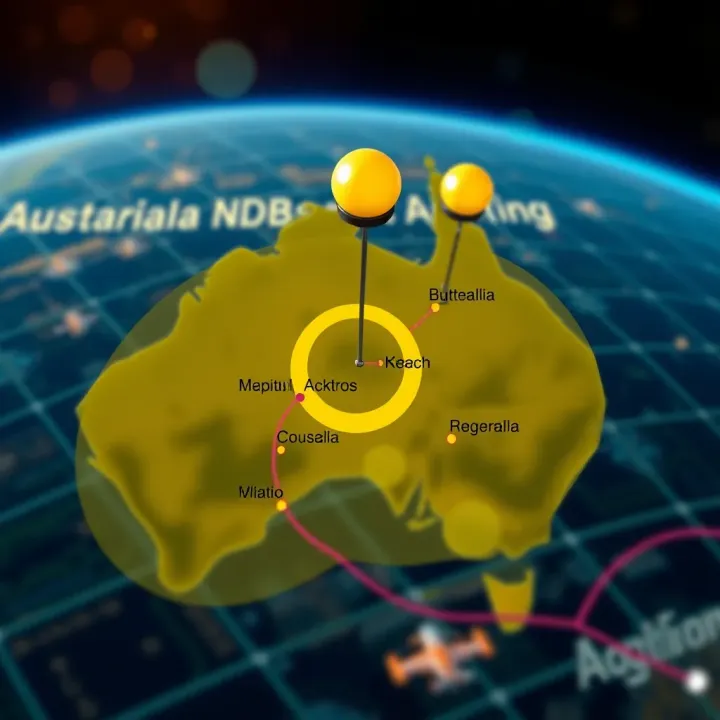
What makes Big Candy interesting is how it’s integrated into modern navigation alongside more advanced systems. While newer tools like VOR and GPS offer greater precision, NDBs remain useful backup aids, especially in remote or less developed regions. For example, regional airfields in the Northern Territory still rely on these beacons for instrument approaches when cloud cover makes visual landing tough.
Remember: NDBs like Big Candy operate on low to medium frequency bands, which can be prone to interference from electrical storms or coastal refraction, so pilots need to interpret the readings with care.
Here’s a quick breakdown of Big Candy’s key features:
Non-directional signal: Emits radio waves in every direction to guide pilots from any angle.
Simple tech: Easy to maintain and cost-effective compared to more complex navigation aids.
Backup role: Supports flights by providing bearings when satellite or other navigation signals fail.
While many might see NDBs as relics of the past, they still have their place in the Australian aviation network. Learning how they work not only helps pilots navigate safely but also gives digital content creators and players in gaming or casino niches an interesting angle to explore the mix of tech history and practical navigation solutions.
Understanding Big Candy NDBs offers a snapshot of how simple tech keeps the wheels turning in aviation, showing that even in a hi-tech world, some old methods stay useful.
A Big Candy Non-Directional Beacon (NDB) stands out in the field of aviation navigation for its distinct characteristics and broader applications compared to standard NDBs. Understanding what sets it apart is key, especially for those interested in aviation tech or the ways pilots navigate through Australian skies. This beacon plays a specific role in guiding aircraft when other systems might fall short, making it practical beyond just its technical specs.
Role of NDBs in aviation
Non-Directional Beacons serve as ground-based radio transmitters that emit signals in all directions. Pilots use these signals to determine their bearing relative to the beacon, assisting with navigation during approaches or departures, particularly where GPS or radar guidance isn’t fully reliable. For example, in some remote parts of Australia, where terrain or weather conditions limit satellite signals or radar coverage, NDBs act as essential waypoints.
Their simplicity and long-established use have meant they remain an important backup navigation method. Airlines and private pilots often rely on these beacons to keep track of their position, especially during night flights or adverse weather. Even though more advanced systems exist, many airports and flying schools still use NDBs for pilot training.
Frequency and signal characteristics
NDBs operate in the low to medium frequency range, typically between 190 kHz and 535 kHz. These signals travel primarily by ground waves, which can reflect off the earth’s surface, extending their reach beyond the horizon compared to line-of-sight signals like VORs. However, low-frequency signals are more susceptible to interference, such as from thunderstorms or electrical equipment, which demands attentiveness from the pilot.
The transmitted signal carries a unique Morse code identification so that pilots can verify which beacon they are tuned to. This is crucial for differentiating between multiple NDBs in busy airspace. Despite signal limitations, their wide coverage and simplicity make them reliable in many practical scenarios.
Origin of the term
The nickname “Big Candy” comes from aviation circles describing a particularly powerful and robust style of NDB. The term is thought to stem from the beacon’s distinctive sound pattern when received in the cockpit, which reminds some pilots of a rhythmical tune or, loosely, the cheerful, steady pulsing of a candy wrapper’s crinkle. Though informal, this name has stuck among operators and enthusiasts to highlight a beacon that packs more punch than your standard fare.
This informal label thus helps pilots quickly identify those beacons with greater range and signal strength when briefing for a flight or navigating actively.
Key differences from standard NDBs
Compared to conventional NDBs, Big Candy NDBs boast higher transmitter power and typically wider coverage areas. This means they can serve planes flying at higher altitudes or covering larger distances without losing signal quality. They also tend to have sturdier construction to endure harsher environments and extended operational hours.
These beacons afford pilots greater confidence, especially in uncertain conditions, providing a stronger, clearer signal that reduces the chance of navigation errors. In regions with vast stretches of remote airspace — such as the Australian outback — this kind of reliability makes a tangible difference for safety and efficiency.
Big Candy NDBs aren’t just bigger in transmit power; they’re a practical tool pilots count on when other signals drop off.
In short, knowing what sets a Big Candy NDB apart helps you appreciate why it remains a valued element in modern aviation, despite newer technologies gradually taking over the skies.
Understanding the technical specifications and how a Big Candy NDB operates is key to appreciating its role in modern aviation. These details reveal not only the reach and reliability of the system but also the challenges it encounters. For those working in industries such as gambling affiliates, casino marketing, or gaming, clear knowledge of how these devices function can also provide unexpected insights into technology dependencies and infrastructure robustness.

Big Candy NDBs generally broadcast their signals over a significant radius, typically ranging from 50 to 100 kilometres. This broad coverage makes them especially useful for guiding aircraft through less populated or remote regions where more advanced navigation aids like GPS may face interruptions. For example, regional airports in Australia’s outback often rely on these beacons due to sparse infrastructure.
Such coverage ensures pilots have a dependable point of reference, especially when flying below cloud cover or in areas where terrain might interfere with other navigational aids. The power output of the transmitter directly influences this range; stronger signals extend coverage but also require more energy and robust equipment.
Signal strength must be sufficient to overcome natural obstacles, such as mountains or dense weather, while maintaining clarity for accurate readings. It's not just about raw power; it’s about the balance between a strong enough signal to reach the aircraft and minimising interference that can muddy the signal.
For instance, an NDB operating at 200 watts can typically cover a greater area than one at 50 watts, but the increased strength can also lead to more electronic noise if not managed properly. Pilots depend on these consistent signals to fix their position accurately and adjust courses when needed.
Aircraft receive signals from Big Candy NDBs through onboard radio direction finders, which tune into the beacon’s low-frequency transmissions. The system doesn’t provide directional information itself; instead, it sends a continuous carrier wave modulated with a distinctive tone pattern that pilots use to identify the station.
Navigators interpret this to home in on the beacon or use it as a waypoint. It's a straightforward method but requires the pilot’s skill to interpret the bearing relative to the aircraft’s heading.
Signal interference remains a significant challenge for NDBs. Atmospheric conditions like thunderstorms, solar activity, and even coastal reflections can distort the beacon's radio waves. This interference sometimes causes signal fading or erroneous bearings.
To counter this, aircraft instruments filter and interpret signals carefully, but residual noise can still lead to less precise navigation. For example, pilots flying near urban areas might experience signal multipath effects caused by buildings, which complicates reception. Understanding these limitations helps operators and aviators anticipate potential issues, especially when flying in complex environments.
While Big Candy NDBs aren’t as precise as GPS, their simplicity and robustness keep them relevant, particularly in remote areas where other navigation aids are scarce.
Overall, the transmitter power, signal range, modulation techniques, and reception issues all interplay to define how Big Candy NDBs perform in real-life flight conditions. This technical understanding is vital not just for pilots but also for anyone interested in the backbone of fly-safe aviation systems.
Big Candy NDBs hold a steady place in aviation, offering practical benefits beyond the flashier, more modern systems. They're particularly valued for their dependability and straightforwardness, making them a useful tool for pilots navigating tricky situations or flying in less developed areas.
One of the standout features of Big Candy NDBs is their reliability when the weather turns sour. Unlike visual navigation aids, these beacons operate using low-frequency radio waves that penetrate fog, rain, and cloud cover. This means pilots can rely on the signals even during heavy mist or at night, when other navigational tools might struggle.
Take, for example, flights over the Tasmanian wilderness, where weather can change rapidly and visibility drop without warning. Pilots using a Big Candy NDB can maintain course with confidence, reducing the risk associated with poor visual cues.
Big Candy NDBs tend to be hardier than some high-tech alternatives. They’re less sensitive to power fluctuations and can keep going when more complex systems might fail. For instance, GPS can suffer signal blockage or jamming, especially near mountainous terrain or dense infrastructure. Meanwhile, the simple design of an NDB allows it to withstand harsh environments and continue to broadcast a consistent signal with fewer technical issues.
This robustness makes Big Candy NDBs a trusted fallback for pilots who prefer a system that won’t let them down in less-than-ideal conditions.
Big Candy NDBs don’t demand a big budget to set up and keep running. Their technology is based on long-established radio principles, which means the equipment is straightforward and relatively cheap. Installation involves simpler hardware, and maintenance doesn’t require specialised technicians or frequent software updates.
For smaller airports, especially those servicing general aviation or training flights, this translates to significant savings. The lower upkeep cost frees up funds for other essentials while still providing a reliable navigation aid.
Remote and regional airstrips across Australia benefit greatly from Big Candy NDBs. In places where it’s challenging or uneconomical to install more complex radar or satellite systems, these beacons offer a practical alternative.
For example, some isolated mining towns or indigenous communities rely on Big Candy NDBs to assist local pilots. The beacons don’t require fibre optic cables or internet connections — just power and an antenna — which means they can be quickly set up and sustained where infrastructure is sparse.
While the world leans increasingly towards satellite navigation, the simplicity and reliability of the Big Candy NDB make it a steady companion for pilots in diverse conditions and locations. They’re a reminder that sometimes, straightforward technology gets the job done just fine.
Reliable in fog, rain, and darkness
Durable under tough conditions
Low installation and running costs
Ideal for locations with limited infrastructure
Big Candy NDBs, while reliable for certain uses, face issues that limit their effectiveness in modern aviation. Understanding these challenges helps clarify why many operators debate their ongoing role.
Signal interference stems largely from natural and man-made sources. Thunderstorms, solar activity, and terrain can disrupt the radio waves NDBs rely on. For example, in northern Australia, tropical thunderstorms often cause sudden signal fading, making navigation tricky. Additionally, nearby electrical infrastructure, such as power lines or even other radio transmitters, can cause distortion. Pilots sometimes notice sudden shifts or static on their automatic direction finder (ADF) instruments, which track the NDB signal.
This interference naturally hampers navigation precision. Since NDBs broadcast non-directional signals, even slight disturbances can result in inaccurate bearings. This imprecision can be problematic during instrument approaches or when operating in low visibility. A pilot relying solely on a Big Candy NDB might find their aircraft positioned several degrees off course. While experienced aviators can compensate by cross-checking other sources, less experienced pilots or automated systems relying heavily on NDB input face real risks.
GPS and VOR systems offer notable advantages over Big Candy NDBs. GPS provides precise, global positioning using satellite signals, unaffected by local interference. VORs emit directional signals allowing more accurate and stable navigation than the simple beacon of an NDB. Many Australian airports have shifted towards these technologies because they significantly reduce the risks linked with signal drift and noise.
As a result, the use of Big Candy NDBs is declining worldwide. Aviation trends are clear: newer, more reliable navigation aids are standard. However, some remote or less trafficked locations still depend on NDBs due to their low cost and simplicity. Despite this, government agencies and aviation authorities like CASA plan gradual phase-outs, often keeping NDBs as backups or training tools rather than primary navigation aids.
While Big Candy NDBs hold nostalgic and practical value, their challenges around interference and accuracy limit their role in a GPS-dominated age.
This evolving landscape shows the balance between maintaining traditional aids and embracing newer tech. Pilots and aviation businesses need to stay aware of these trends to adapt their operations safely and efficiently.
Big Candy NDBs still play a role in aviation, especially in places where more modern systems aren’t fully rolled out yet. Despite GPS and VOR systems dominating navigation in many metropolitan areas, these beacons maintain practical value in certain regions and circumstances. Understanding their current use cases and how they might evolve gives a clearer picture of their ongoing relevance.
In Australia and other parts of the world, Big Candy NDBs remain operational primarily in regional and remote airports. Take places like Alice Springs or Broome, where terrain and infrastructure pose challenges for more advanced navigation aids. These NDBs provide a reliable fallback for pilots flying in less equipped areas. Their simple setup and wide coverage make them suitable in places where installing and maintaining GPS ground stations or VORs would be costly or impractical.
Beyond remote operations, many pilot training schools continue using Big Candy NDBs to teach basic navigation skills. Learning to navigate using NDBs helps budding pilots understand radio navigation fundamentals. This hands-on experience proves valuable when pilots later progress to more complex systems. It also builds confidence to fly in scenarios where satellites or other aids might fail or be unavailable.
While modern aviation leans heavily on satellite-based technologies, there are emerging navigation enhancements that could be integrated with Big Candy NDBs. For example, combining NDBs with Automatic Dependent Surveillance-Broadcast (ADS-B) technology could enhance situational awareness. This hybrid approach would help aircraft receive position data from satellites while still benefiting from ground-based beacon signals, adding redundancy.
Looking ahead, Big Candy NDBs may also evolve through digital signal processing improvements. Upgrading transmitters to reduce interference or boosting signal clarity could extend their useful lifespan. Additionally, integration with cockpit displays that better visualise NDB information would make navigation more intuitive for pilots. These practical upgrades could preserve the role of Big Candy NDBs in aviation, especially where safety and cost considerations limit full adoption of more expensive aids.
While cutting-edge systems take centre stage, Big Candy NDBs offer a dependable and straightforward navigation method that pilots and operators continue to value, particularly in rugged and remote environments.
In summary, Big Candy NDBs hold their ground where geography, cost, and training needs justify their continued use. Their future lies in thoughtful upgrades and smart integrations that complement, rather than compete with, modern navigation technology.
Discover the key players in Big Candy 🍬, their product trends, and how they tackle health concerns, regulations, and supply challenges for a sweeter future ahead.

Explore big candy packs 🍬 for variety and value in one go. Find tips on types, storage, where to buy and picking the right sweets for your next party or treat stash 🍫

Discover why big candy bars 🍫 are winning hearts, their history, how they fit your snacking habits, plus the challenges in making these larger treats. 🍬

Find out how to pick the best big candy bags for your party 🍬, considering guests’ age, budget, treat quality, and fun ways to match your theme.
Based on 14 reviews